Jorge Luis Borges (1899 – 1986)

Wednesday, 28 September 2011
Thursday, 15 September 2011


Monday, 29 August 2011
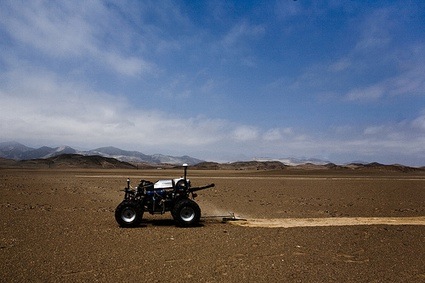
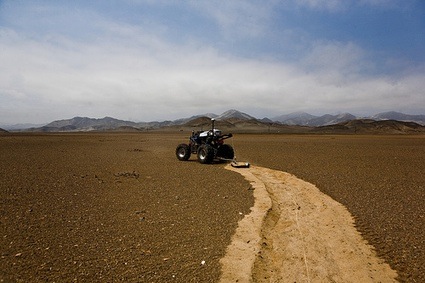
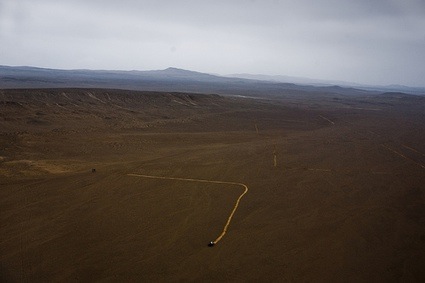
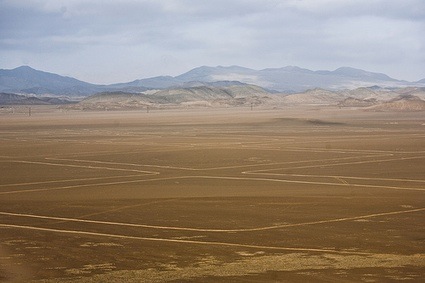
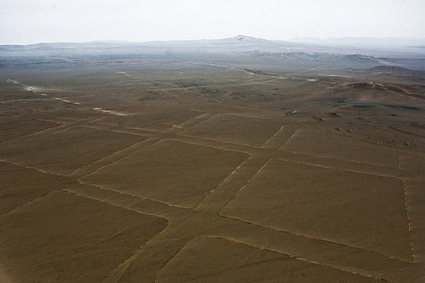
Rodrigo Derteano : Ciudad Nazca / Nazca City
This is great- an autonomous robot tracing the full scale outline of an imaginary city onto the Peruvian desert. Taking inspiration from the ancient Nazca lines of Peru, Rodrigo collaborated with architecture collective Supersudaca to design a street layout by collaging pieces from the ten largest cities of Latin America.
"By drawing a gigantic map of a city onto the desert, the project not only seeks to draw attention to this facts, but questions our very concept of city, specially in regards to its environment. Lima is a sort of negation of the desert. Our model and ideal of city is very occidental, and does not adapt very well to its context. The desert is seen a kind of non-place, not a part of our living environment. In this sense, there's a sort of irony in using a robot to draw a city onto the desert, as if it would be drawing it on the surface of Mars"


Tuesday, 23 August 2011
Monday, 15 August 2011
Stalin's Seven Sisters
Having spent the last few weeks travelling through Russia, I found Moscow to be an amazing giant relic of an idealised future that was fated never to be.
Like Socialist Realism in painting, the Socialist Classical architectural style was intended to serve as a Soviet propaganda tool for socialism and communism. Stalin's 'Seven Sisters', a group of seven skyscrapers completed between 1947 to 1953 by various architects under the direction of Joseph Stalin exemplify this style in Moscow.
Strategically placed as to surround the central districts of Moscow, these building really do impact upon the city, and I really enjoyed their presence. Their conformity of style mixed with an isolation in scale from their direct surroundings was a great contrast to the modern habit of crowding tall similarly styled buildings together into one district. Moscow of course now has a district full of tall glassy skyscrapers, but Stalin's Skyscrapers continue to define the city for visitors and residents, and now act as some of the last physical reminders of communism in Russia.


Friday, 15 July 2011


Thursday, 14 July 2011
Oscar Ihermitte: Urban Stargazing
"Over time, society has developed a complex rhythm that demands we live in an environment artificially lit twenty-four hours a day preventing us from experiencing the natural lights coming from billions of light years away, shining and twinkling as soon as the Sun sets to the west.


"The map is showing each constellation with their corresponding coordinates.
To go on a stargazing walk, enter the latitude/longitude of any constellation on a web mapping application."


"Each constellation is a triangulated struture made out of clear ø 0.6mm nylon line, ø 0.2mm polyethylene braid, ø 0.75mm fibre optic and a solar powered LED. During the day, the battery is being recharged by the solar panel and the circuit
switches ON the LED when it is dark enough to observe stars. In order to have the constellation in the air, the team uses a telescopic catapult to fix the structure on top of trees."
Tuesday, 12 July 2011
Of Silence and Noise

Geoff Murphy's 1985 film, The Quiet Earth follows a solitary character suddenly faced with a world devoid of human company. Exploring the paradoxical nature of 'the individual,' our pioneering aspirations for self-sufficiency and distinction are quickly broken down by an inherent yearning for comfort that can only be gained through the company of others. As a precursor to its underlying theme, this film's title speaks of our desire for quiet, a relationship that is balanced rather precariously between the divergent poles of silence and noise.
'Quiet' is something to be sought, it alludes to feelings of peace and stillness within a gentle ambience; whereas absolute quite, that of 'silence' heralds the terrifying prospect of loneliness, stillness, and lifelessness. In his writings, composer Murray Schafer discusses how "Man fears the absence of sound as he fears the absence of life," and geographer Douglas Pocock agrees, for "an environment without sound is lifeless and unreal, without flow or rhythm, and frightening."
Silence is often defined as simply 'the absence of sound,' yet this is an impossible phenomenal reality. The technically silent environment of an anechoic chamber only acts to amplify our own bodily sounds, enabling composer John Cage the ability to clearly distinguish the sounds of his nervous system from those of blood circulation; leading to his conclusion that "There is no such thing as silence. Something is always happening that makes a sound."
The evocative nature of 'silence' is intensified by this antithetical position: its opposition to the sounds of life rather than being something tangible or phenomenal. Its antithesis, 'noise' is however highly phenomenal, and while felt to be equally unpleasant, noise is a natural byproduct of human activity and company.
Everyday sounds are often only noticed by us if they become an irritant and annoyance, or cause of surprise. As our cities densify and grow in size, noise pollution becomes a contentious issue for many inhabitants; however our attitudes towards this noise may say more about our relationship with other humans than with the sounds themselves.
Excerpt from my dissertation Architecture of Everyday Sounds that I wrote back in 2009, the rest can be read here
Wednesday, 29 June 2011
The frame is part of the drawing
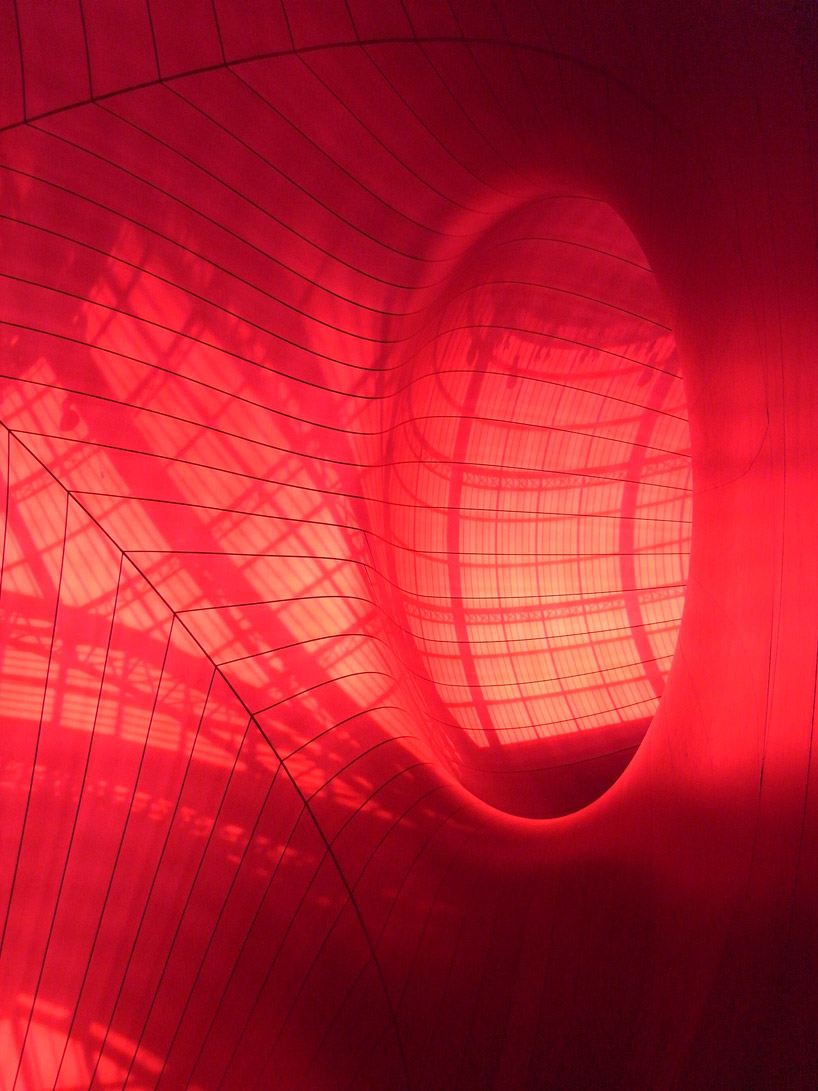
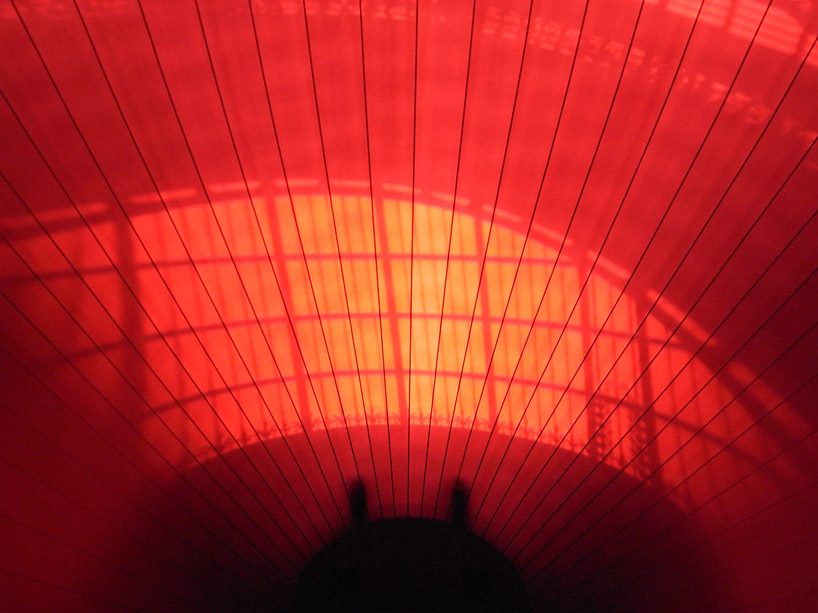
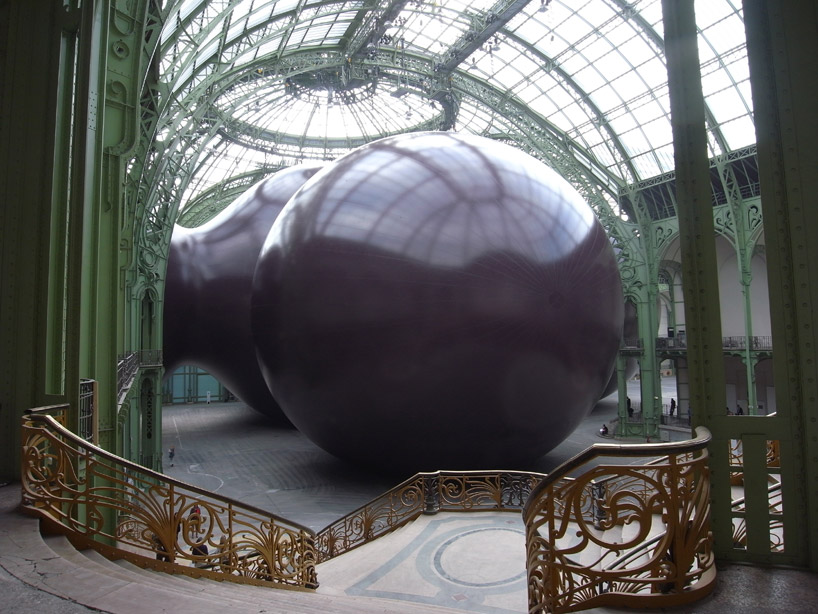
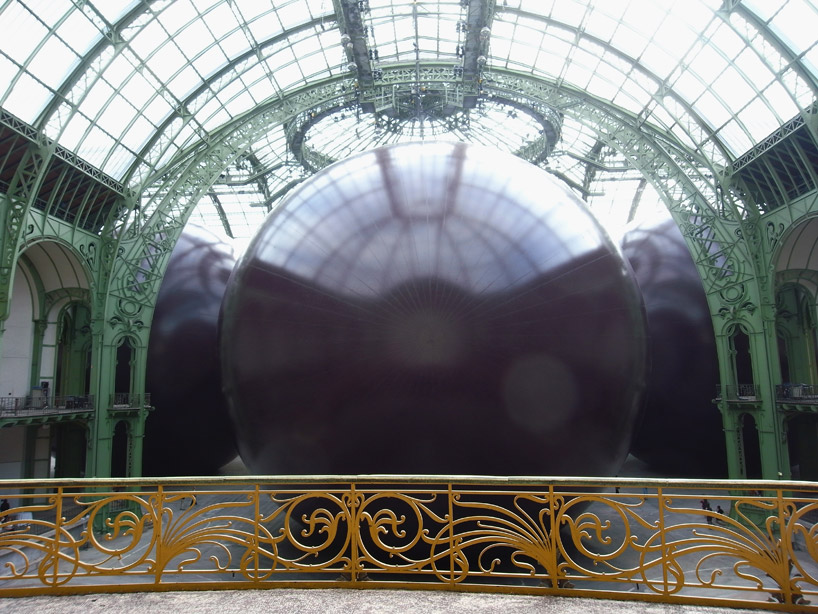


Anish Kapoor - Leviathan, Grand Palais, Paris (2011)
USS Macon at Moffett Field, California (1933)
Salon de locomotion aerienne, Grand Palais, Paris (1909)
Subscribe to:
Posts (Atom)